
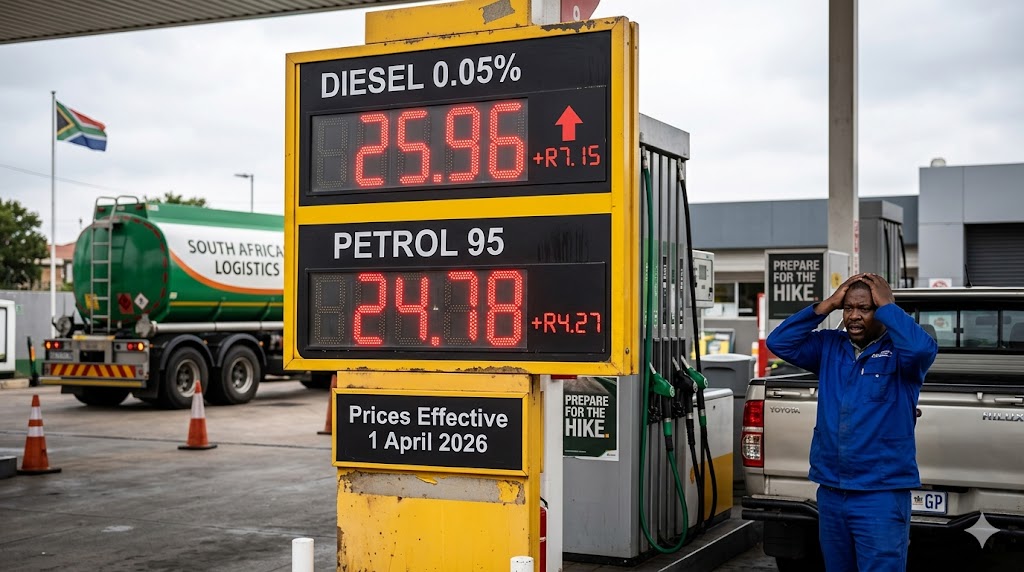
South African consumers and the transport industry are facing a historic financial shock this April, as the latest data from the Central Energy Fund (CEF) points to a diesel price hike of over R7.00 per litre.
Combined with a mandatory 21-cent fuel tax increase and a surge in global oil prices following conflict in the Middle East, the looming “April Bloodbath” is expected to push the cost of living to new heights.
The Triple Threat: Why Prices are Skyrocketing
The projected under-recovery is the result of a “perfect storm” of economic factors:
- Global Oil Surge: Brent Crude has breached the $103–$106 per barrel mark following military escalations in the Middle East. Supply concerns involving the Strait of Hormuz have added a massive “risk premium” to international petroleum products.
- Currency Pressure: While the Rand showed resilience earlier this year, it has retreated to approximately R16.75–R16.85/$1, making fuel imports significantly more expensive.
- Annual Tax Hikes: On April 1, the 2026 Budget adjustments take effect. Motorists will pay an additional 21 cents per litre across the General Fuel Levy, Road Accident Fund (RAF) levy, and Carbon Tax.
April 2026 Price Forecast (Inland Estimates)
Based on CEF mid-month snapshots and the confirmed tax adjustments, here is what motorists can expect at the pumps:
| Fuel Grade | Current (March) | Market Change | Tax Hike | Expected April Price |
| Diesel 0.05% | R18.53 | + R7.04 | + 21c | R25.78 |
| Diesel 0.005% | R18.60 | + R7.15 | + 21c | R25.96 |
| Petrol 95 | R20.30 | + R4.27 | + 21c | R24.78 |
| Petrol 93 | R20.19 | + R3.87 | + 21c | R24.27 |
PRO TIP: Diesel prices are wholesale estimates. Retail service stations set their own margins, meaning pump prices could be even higher.
Economic Impact: From Farms to Shelves
Economists warn that a diesel increase of this magnitude—nearly 40% in a single month—will have a “cascading effect” on the economy.
“Diesel is the primary fuel for logistics and agriculture,” says market analyst Dawie Roodt. “When it costs R7 more to move a truck of maize, that cost is passed directly to the consumer at the supermarket checkout.”
The hike coincides with Eskom’s 8.76% tariff increase, also effective April 1, leaving households squeezed from both the transport and energy sectors.
Is Relief Possible?
Civil society groups like OUTA and the AA have renewed calls for the government to stabilize prices by reviewing the fuel price formula. While a temporary “fuel levy holiday” was granted in 2022, the National Treasury has signaled that current fiscal constraints make such a move unlikely in 2026.
The Department of Mineral Resources and Energy will announce the final, official price changes on Tuesday, March 31.