
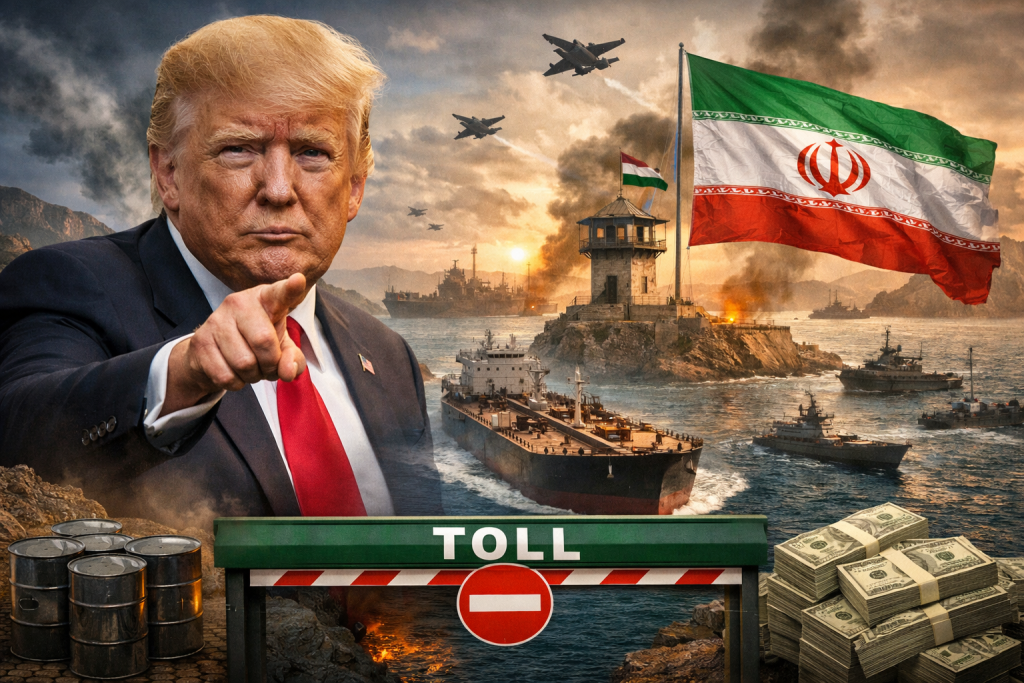
The administration of Donald Trump is intensifying efforts to secure a toll-free reopening of the Strait of Hormuz, as tensions with Iran threaten the stability of a fragile ceasefire.
The White House has made it clear that the United States will not accept any form of tolls or restrictions on ships passing through the vital waterway, emphasizing that the Strait of Hormuz must remain open, free, and accessible to global shipping. Officials argue that allowing fees or limitations could disrupt global oil supply chains and destabilize already sensitive energy markets.
The issue has quickly become a central point of contention between Washington and Tehran. While the U.S. insists on unrestricted navigation, Iran has indicated it may seek to impose tolls on vessels, framing the move as a matter of sovereignty, security, and economic control. The disagreement underscores deeper divisions over who ultimately governs access to one of the world’s most critical maritime routes.
The stakes are high. The Strait of Hormuz handles nearly 20% of the world’s oil shipments, making it a crucial artery for global trade and energy distribution. Even minor disruptions in the region can send shockwaves through oil prices, shipping logistics, and financial markets worldwide.
The dispute unfolds against the backdrop of a temporary U.S.–Iran ceasefire, which has eased immediate fears of military confrontation but remains fragile. Reports of heightened monitoring, shipping delays, and unclear enforcement have raised concerns that the truce could unravel if negotiations over the strait fail.
Markets have already responded to developments in the region. News of the ceasefire initially drove oil prices lower and lifted global stock markets, reflecting optimism about de-escalation. However, uncertainty surrounding the future of the Strait of Hormuz continues to weigh on investor confidence.
Trump’s firm stance on rejecting tolls also marks a notable shift from earlier suggestions that entertained the possibility of a fee-based system involving both the United States and Iran. The current position signals a harder line, prioritizing freedom of navigation and reinforcing U.S. opposition to any form of restricted access.
As diplomatic efforts continue, the outcome of this dispute could shape not only the future of the ceasefire but also the stability of global energy flows. With the Strait of Hormuz at the center of the standoff, the world is watching closely to see whether cooperation—or renewed conflict—will define the next phase of U.S.–Iran relations.