
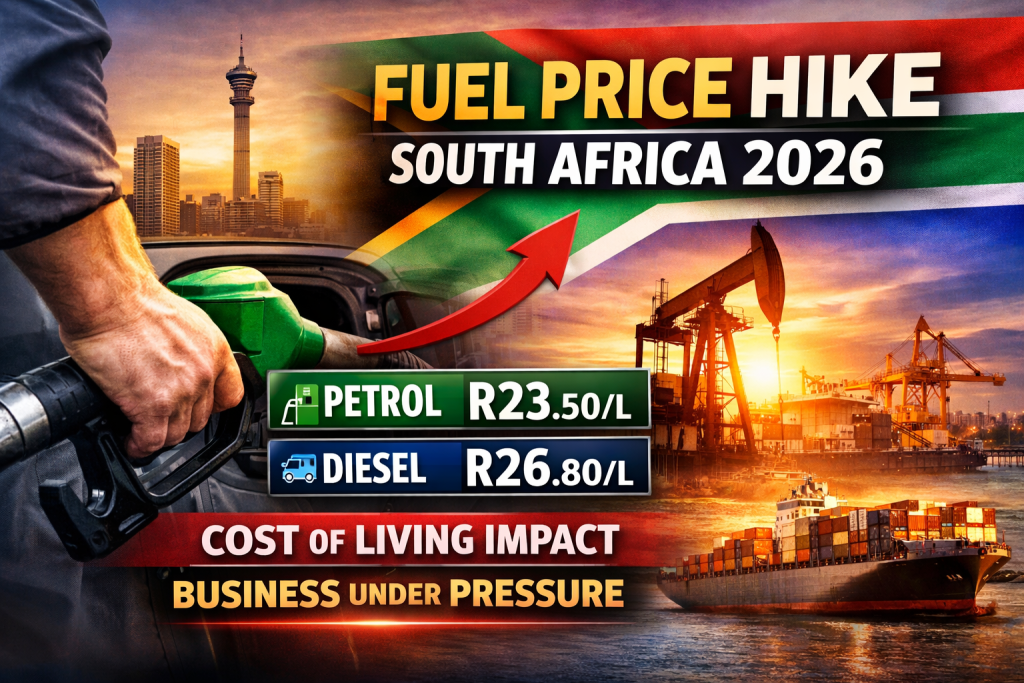
Current Fuel Prices in South Africa (April 2026)
Recent estimated fuel prices in South Africa show continued pressure at the pump:
- Petrol 95 (Inland): R22.80 – R23.60 per litre
- Petrol 93 (Inland): R22.40 – R23.20 per litre
- Diesel 0.05%: R25.30 – R26.40 per litre
- Diesel 0.005% (Cleaner grade): R25.80 – R26.90 per litre
These levels keep fuel prices in South Africa 2026 close to recent highs, especially for diesel-dependent industries such as transport, agriculture, and logistics.
🇿🇦 Why Fuel Prices Are Still High in South Africa
The continued rise in fuel prices in South Africa is driven by three major factors:
- Global oil price fluctuations caused by supply uncertainty and geopolitical tensions Weak South African rand exchange rate, increasing import costs
- 🏦 Taxes and fuel levies, which make up a significant portion of pump prices
Because South Africa imports most of its refined fuel, even small global shifts quickly affect local prices.
🇿🇦 Impact on Local Businesses in South Africa
The rise in fuel prices in South Africa 2026 is significantly increasing operating costs across multiple industries. Transport companies, retailers, and manufacturers are all experiencing higher logistics expenses as diesel prices remain elevated.
Delivery and logistics businesses are among the hardest hit, as fuel is their primary operating cost. Many companies are adjusting pricing structures or introducing fuel surcharges to manage rising expenses. This is directly affecting business costs in South Africa and reducing profit margins.
Small and medium-sized enterprises (SMEs) are especially vulnerable, as they often lack bulk fuel purchasing power. Many SMEs are now reducing delivery distances, limiting operations, or increasing product prices to remain viable in a high-cost environment.
Cost of Living and Inflation Pressure
The rise in fuel-driven inflation in South Africa continues to push up the cost of essential goods and services. Transport costs are embedded in nearly every product, meaning fuel increases affect food, retail, and manufacturing prices.
Households are experiencing higher expenses through:
- Increased taxi and ride-hailing fares
- Higher grocery and retail prices
- Expensive delivery and courier services
- Combined pressure with electricity and rent increases
For many families in South Africa, fuel remains one of the most important drivers of monthly financial stress.
Global Impact of Rising Fuel Prices
The effects of global fuel price increases extend beyond South Africa, influencing inflation and trade worldwide.
Higher oil prices increase shipping and aviation costs, making international trade more expensive. This results in:
- Higher global shipping and freight costs
- Increased airline ticket prices
- Higher manufacturing and production expenses
- More expensive global supply chains
Emerging markets are particularly affected due to currency weakness and reliance on imported energy.
Economic Outlook for South Africa 2026
Economists warn that continued fuel price volatility in South Africa could slow economic growth by reducing consumer spending and increasing business uncertainty.
Key risks include:
- Reduced household purchasing power
- Pressure on small business survival
- Higher inflation across goods and services
- Slower GDP growth due to transport cost inflation
Conclusion
The rise in fuel prices in South Africa 2026 continues to be a major economic challenge, affecting everything from household budgets to global trade flows. With petrol and diesel prices remaining elevated, both businesses and consumers face ongoing cost pressures driven by global oil markets, currency weakness, and local economic conditions.