
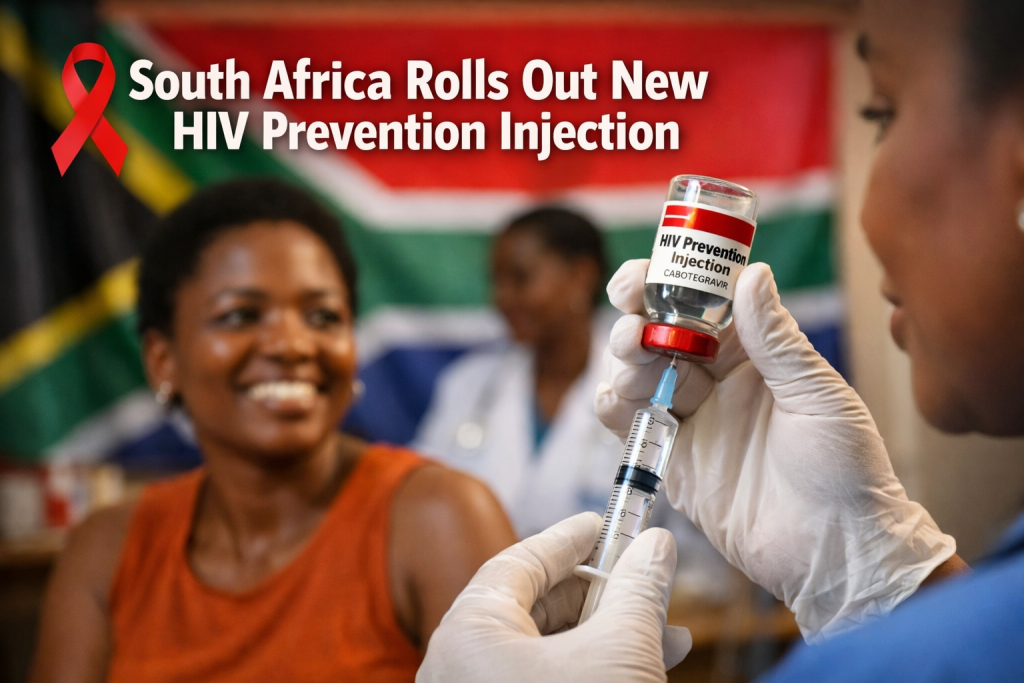
South Africa has begun the phased rollout of a new HIV prevention injection, marking a major step forward in the country’s fight against HIV/AIDS. The medication, lenacapavir, is a long-acting HIV prevention option administered just twice a year, offering a convenient alternative to daily PrEP pills for high-risk groups.
Health authorities confirm that the rollout will occur gradually. The country is receiving staged shipments of lenacapavir, ensuring that clinics are properly prepared and that distribution systems can support the initial rollout before expanding nationwide.
In the first phase of the HIV prevention programme 2026, South Africa aims to reach approximately 456,000 people. Because the injection is administered twice yearly, this amounts to around 900,000 doses required for the period.
The first batch of doses, funded through partnerships like the Global Fund, will cover only a portion of those in need. Experts emphasize the importance of continued procurement and investment to meet demand and ensure consistent access to the HIV prevention injection.
Public health specialists describe lenacapavir as a “game changer.” Unlike daily oral PrEP, the twice-yearly injection reduces challenges with adherence, stigma, and inconsistent access to medication.
The government is also exploring local manufacturing to make the drug more affordable and expand availability across South Africa and the broader African region.
Although still in the early stages, experts are optimistic that the new HIV prevention method could significantly reduce new HIV infections. Successfully scaling the programme would strengthen South Africa’s position as a leader in the global HIV response.
However, the success of the HIV prevention programme depends not only on supply, but also on public awareness, effective healthcare infrastructure, and sustained funding.
As the phased rollout continues, more clinics across South Africa are expected to provide the lenacapavir injection, bringing the country closer to a future with fewer new HIV infections.